


Product Description
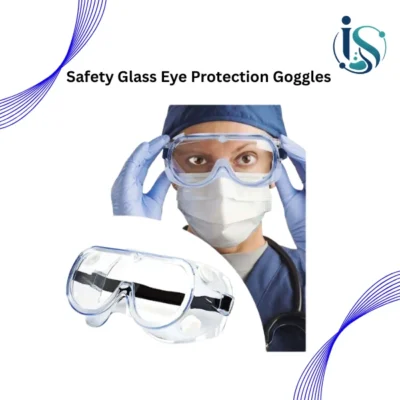
The Safety Glass Eye Protection Goggles are reusable protective eyewear designed to help shield the eyes during laboratory, workshop, construction, engineering and other activities where particles, dust or suitable splash hazards may be present.
A current Bangladesh exact-product listing identifies the eyewear as having a clear polycarbonate lens with anti-fog and scratch-resistant characteristics. The same product is listed under the EN166 designation and Made in China origin.
Protective eyewear is an important component of personal protective equipment because many practical and industrial activities can expose the eyes to hazards such as:
- Flying particles
- Dust
- Small fragments
- Laboratory splashes
- Wood particles
- Metal particles
- Construction debris
- Mechanical fragments
- Selected chemical splashes
- Environmental irritants
OSHA states that appropriate eye or face protection must be used when employees are exposed to hazards involving flying particles, molten metal, liquid chemicals, acids or caustic liquids, chemical gases or vapours, or potentially harmful light radiation.
The transparent lens allows the wearer to maintain clear forward visibility while keeping a protective barrier in front of the eyes.
Current exact-product information identifies the lens as polycarbonate, a material commonly used in safety eyewear.
The listed product also incorporates side protection intended to reduce exposure from particles or splashes approaching from angles rather than directly from the front.
This makes the safety glasses useful in environments such as:
- Chemistry laboratories
- Biology laboratories
- Physics laboratories
- Research laboratories
- School science laboratories
- University laboratories
- Engineering workshops
- Woodworking areas
- Metalworking environments
- Construction sites
- Manufacturing facilities
- Maintenance workshops
The eyewear is reusable and requires no electricity, battery, calibration or electronic setup.
It can be worn whenever the applicable risk assessment identifies suitable eye protection as necessary.
However, the words “Safety Glass” or “Safety Goggles” alone do not establish protection against every eye hazard.
The user must verify that the supplied model carries the correct markings and performance rating for the specific activity.
For example, standard clear safety eyewear should not automatically be assumed suitable for:
- Laser radiation
- Welding radiation
- High-energy optical radiation
- Every corrosive chemical splash
- Molten-metal hazards
- High-temperature environments
- Every high-impact application
unless the actual product is specifically tested and marked for the hazard.
Key Features
- Clear Safety Glass Eye Protection Goggles.
- Protective eyewear for laboratory and industrial applications.
- Polycarbonate lens according to current exact-product listing.
- Clear / transparent lens.
- Anti-fog feature, supplier-listed.
- Scratch-resistant feature, supplier-listed.
- Wide visual area.
- Side protection.
- Lightweight eyewear format.
- Designed for comfortable routine wear.
- Suitable for laboratory practical work.
- Suitable for workshops.
- Suitable for construction environments where the verified rating is appropriate.
- Useful for woodworking.
- Useful for metalworking.
- Suitable for educational science laboratories.
- Appropriate for many general industrial activities.
- Reusable construction.
- Easy manual fitting.
- No battery required.
- No electricity required.
- No calibration required.
- Easy to clean and store.
- EN166 designation according to current supplier listing.
- Made in China according to current exact-product listing.
The current exact Bangladesh product page specifically lists polycarbonate lens material, anti-fog and scratch-resistant characteristics and China origin.
Product Overview
Clear Polycarbonate Lens
The current exact-product listing identifies the lens material as Polycarbonate (PC).
The clear lens is designed to allow normal visibility while placing a physical protective barrier between the eyes and appropriate workplace hazards.
Transparent lenses are particularly useful where accurate color recognition and visibility are important, such as:
- Laboratory experiments
- Sample handling
- Instrument operation
- Assembly tasks
- Engineering work
- Technical training
The exact optical-class marking should be checked from the supplied eyewear if optical performance is important for institutional procurement.
Anti-Fog Feature
The product is currently listed with an anti-fog lens feature.
Fogging can reduce visibility when:
- The user is active.
- Temperature changes rapidly.
- Humidity is high.
- A face mask is being worn.
- The workplace is warm.
An anti-fog treatment can help maintain visibility, but anti-fog performance may decrease through wear, cleaning or coating damage.
Users should therefore avoid aggressive cleaning products unless approved for the lens.
Scratch-Resistant Lens
The current Bangladesh listing describes the lens as scratch-resistant.
Scratch resistance can help extend the useful life of protective eyewear during routine handling.
However, scratch-resistant does not mean scratch-proof.
Damaged eyewear should be replaced if scratches begin to:
- Reduce visibility
- Distort vision
- Obstruct the working area
- Affect safety
- Weaken the protective lens
Side Protection
The current exact-product description identifies extended side protection intended to provide coverage beyond the central lens area.
Side protection is useful when particles can approach from an angle.
OSHA specifically requires side protection when there is a hazard from flying objects.
Adjustable Fit
The exact current seller listing gives approximate dimensions of:
Front Width: 15 cm
Lens Width: 13.5 cm
Lens Height: 5 cm
Temple Length: 15 cm
Inner Width: approximately 11–14 cm adjustable
These dimensions should be treated as supplier-listed approximate specifications rather than manufacturer-controlled tolerances.
Use With Prescription Spectacles
The current product listing describes the eyewear as capable of fitting over regular spectacles.
This may be useful for users who already wear prescription glasses.
OSHA states that workers who use prescription lenses and are exposed to eye hazards must use protection that either incorporates the prescription or can be worn over prescription lenses without disturbing the correct position of either set of lenses.
The actual fit should always be checked before beginning work.
EN166 and Current Eye-Protection Standards
Current Bangladesh listings market this model under the name:
Safety Glass Eye Protection Goggles EN166.
BSI describes EN 166 as a standard that specified functional requirements for personal eye protectors intended for hazards in environments including industry, laboratories, education and DIY activities.
However, standards have since changed.
BSI states that the newer EN ISO 16321-1:2022+A1:2025 standard replaced EN 166 for new European occupational eye-protection conformity from 11 November 2025.
Therefore:
- Existing products may still carry EN166 markings.
- A seller’s EN166 description should not be treated as independent proof of certification.
- New European procurement requirements may specify EN ISO 16321-1.
- Buyers should inspect the actual lens/frame markings.
- Certification documents should be requested where tender specifications require them.
Main Applications
Chemistry Laboratory Work
Safety goggles or suitable protective eyewear are commonly required when chemistry practical work creates eye hazards.
Potential risks may include:
- Liquid splashes
- Broken glass
- Powder
- Particles
- Unexpected reactions
- Chemical transfer activities
The supplied eyewear must be appropriate for the specific chemical and splash risk.
OSHA requires suitable eye or face protection where liquid chemicals, acids, caustic liquids or chemical hazards can injure the eyes.
For high-risk corrosive chemical operations, safety glasses alone may not provide sufficient protection and additional face protection may be needed based on the risk assessment.
Biology Laboratory Work
The goggles can be used during suitable biology practical activities where eye protection is required.
Potential examples include:
- Specimen preparation
- Laboratory cleaning
- Dissection-related activities
- Biological practical demonstrations
- Solution handling
The institution should select appropriate PPE according to the specific activity.
School Science Laboratories
Current exact-product listings specifically identify school and university science laboratories among the applications for these safety glasses.
Students can wear suitable protective eyewear during supervised:
- Chemistry experiments
- Physics practicals
- Biology practicals
- Technical activities
The eyewear should be inspected and cleaned between users where institutional hygiene procedures require it.
University and Research Laboratories
Researchers and laboratory technicians can use suitable eye protection when a risk assessment identifies possible:
- Splash hazards
- Mechanical particles
- Broken glass
- Equipment-related debris
OSHA’s eye-protection requirements are based on matching PPE to the hazard.
Workshop and Engineering Work
Workshops may generate flying particles through activities such as:
- Drilling
- Cutting
- Grinding
- Filing
- Mechanical repair
- Component assembly
Protective eyewear appropriate to the impact hazard should be selected.
The exact Bangladesh product is currently marketed for workshop and engineering applications.
Woodworking
Woodworking activities can generate:
- Sawdust
- Wood chips
- Splinters
- Flying particles
Safety eyewear helps create a barrier between these materials and the eyes.
Current exact-product information includes woodworking among its intended applications.
Metalworking
Metalworking can expose users to:
- Metal chips
- Small fragments
- Dust
- Grinding debris
The correct impact rating should be confirmed before using the eyewear for higher-energy metalworking tasks.
Construction Work
Construction environments can include:
- Dust
- Concrete particles
- Wood fragments
- Drilling debris
- General flying material
The current exact product is marketed for construction and field work.
OSHA requires suitable eye protection when employees are exposed to flying particles and other eye hazards.
Maintenance Activities
Maintenance personnel may use eye protection when working around:
- Machinery
- Hand tools
- Cleaning operations
- Mechanical components
- Dust-producing equipment
Actual PPE selection should follow the workplace risk assessment.
Educational Technical Training
Technical colleges and vocational institutes can include reusable safety glasses in student PPE inventories for suitable practical activities.
Key Benefits
- Eye protection: Provides a physical protective barrier for suitable workplace hazards.
- Clear visibility: Transparent lens allows users to see the work area.
- Polycarbonate construction: Current exact product uses a PC lens.
- Anti-fog: Supplier-listed lens feature helps reduce fogging.
- Scratch-resistant: Helps protect the lens during normal use.
- Side coverage: Offers additional protection beyond the front of the eye.
- Reusable: Can be used repeatedly while undamaged and hygienically maintained.
- Lightweight: Convenient for regular laboratory or workplace use.
- Adjustable: Current product provides adjustable fitting dimensions.
- Prescription-glass compatibility: Seller states the model can fit over regular spectacles.
- Laboratory-friendly: Suitable for many practical environments.
- Student-friendly: Useful for supervised educational experiments.
- Workshop use: Suitable for applicable mechanical activities.
- Industrial application: Can form part of workplace PPE.
- No electricity: Completely passive safety equipment.
- Easy storage: Small enough for laboratory or PPE cabinets.
- Cost-effective: Reusable design can support institutional use.
Who Should Buy This Product?
Safety Glass Eye Protection Goggles are suitable for:
- Schools
- Colleges
- Universities
- Chemistry laboratories
- Biology laboratories
- Physics laboratories
- Research laboratories
- Diagnostic laboratories, where appropriate
- Engineering workshops
- Technical training centres
- Manufacturing facilities
- Construction companies
- Maintenance departments
- Woodworking facilities
- Metalworking workshops
- Industrial factories
- Laboratory technicians
- Researchers
- Science teachers
- University students
- Engineering students
- Workshop technicians
- Construction personnel
- Safety departments
- PPE procurement teams
- Institutional purchasing departments
Usage and Handling Summary
Inspect the goggles before every use.
Check the lens for:
- Cracks
- Deep scratches
- Cloudiness
- Chemical damage
- Distortion
Inspect the frame for:
- Cracks
- Broken arms
- Loose parts
- Damaged side shields
- Deformation
Do not use visibly damaged protective eyewear.
Put the glasses on before beginning an activity that presents an eye hazard.
Make sure:
- Both eyes are fully covered.
- The eyewear sits securely.
- Side protection remains correctly positioned.
- Vision is not significantly distorted.
- The glasses do not slip during normal movement.
If prescription glasses are worn underneath, ensure both the prescription lenses and the protective eyewear remain properly positioned.
OSHA specifically requires suitable over-prescription protection where employees with corrective lenses encounter eye hazards.
Keep the eyewear on throughout the hazardous task.
Do not remove protective eyewear while:
- Particles are still airborne.
- Chemicals are being transferred.
- Nearby work continues to generate debris.
- Equipment remains in operation.
After use, clean the goggles according to the product instructions.
Allow them to dry completely.
Store them in a protected place away from materials that could scratch or damage the lens.
Cleaning and Care Summary
Remove loose dust carefully before wiping the lens.
Use:
- Clean water
- Mild compatible soap, where appropriate
- Soft lens-safe cloth
- Manufacturer-approved cleaning materials
Avoid using:
- Abrasive cloth
- Rough paper
- Harsh solvents
- Unverified chemical cleaners
- Sharp cleaning tools
because they may damage protective coatings or scratch the lens.
After cleaning:
- Rinse where necessary.
- Dry using a clean soft cloth.
- Inspect the lens.
- Check the frame.
- Store the eyewear in a clean location.
Replace safety glasses if damage makes clear vision or reliable protection uncertain.
Safety Considerations
- Select protective eyewear according to the actual hazard.
- Safety glasses do not provide universal eye protection.
- Verify the applicable impact rating.
- Verify chemical-splash suitability before chemical work.
- Do not use ordinary safety glasses for laser work unless specifically rated.
- Do not use for welding unless specifically designed and correctly filtered for welding.
- Replace cracked eyewear.
- Replace badly scratched lenses.
- Keep the lenses clean.
- Ensure a secure fit.
- Use side protection where flying-object hazards exist.
- Wear additional face protection where the risk assessment requires it.
- Do not modify the frame or lens.
- Do not drill holes into protective eyewear.
- Do not paint over required safety markings.
- Inspect shared laboratory goggles before issuing them to students.
- Clean shared eyewear according to institutional hygiene procedures.
- Confirm certification for regulated workplace applications.
OSHA emphasizes that eye protection must be appropriate to the hazards present rather than selected solely because a product is generally described as safety eyewear.
Limitations and Important Considerations
- Manufacturer has not been confirmed.
- Brand has not been confirmed.
- Exact model number has not been confirmed.
- Current exact listing describes the product as EN166.
- Independent EN166 certificate has not been verified.
- EN ISO 16321-1 certification has not been verified.
- Exact impact rating has not been independently confirmed.
- Exact optical class has not been confirmed.
- Exact chemical-splash rating has not been independently verified.
- UV380 protection is claimed by a current seller but should be checked from actual lens markings or manufacturer documentation.
- Anti-glare performance is supplier-listed and not independently verified.
- Anti-fog performance can deteriorate over time.
- Scratch-resistant does not mean scratch-proof.
- Polycarbonate lens material is based on current exact-product information.
- Frame material has not been confirmed.
- Exact product weight has not been confirmed.
- Dimensions are supplier-listed approximate values.
- Country of origin is currently listed as China but should be confirmed from the supplied unit.
- Safety eyewear does not replace a face shield where full-face protection is required.
- Standard clear lenses are not welding filters.
- Standard clear lenses are not laser-safety lenses.
- Product suitability must be matched to the workplace or laboratory hazard.
BSI’s current guidance also means buyers should be careful with older EN166-only marketing, because new European occupational eyewear conformity has transitioned to EN ISO 16321-1.
Available Pack Size or Variations
The requested configuration is:
Product: Safety Glass Eye Protection Goggles
Product Type: Protective Safety Eyewear
Lens Material: Polycarbonate, current supplier-listed
Lens Color: Clear / Transparent
Lens Features: Anti-Fog, Scratch-Resistant
Side Protection: Yes, supplier-listed
Standard: EN166, supplier-listed
Operation: Manual
Reusable: Yes
Pack Size: 1 Piece
Origin: China, according to current exact-product listing
Supplier-Listed Approximate Dimensions
Front Width: 15 cm
Lens Width: 13.5 cm
Lens Height: 5 cm
Temple Length: 15 cm
Adjustable Inner Width: approximately 11–14 cm
These specifications are reported by a current Bangladesh exact-product seller.
Exact dimensions and fitting should be verified from the current supplied model when required for tender or institutional procurement.
Safety Glass Eye Protection Goggles Price in Bangladesh
The latest Safety Glass Eye Protection Goggles price in Bangladesh should be confirmed directly from Inaya Scientific.
For market reference, a current Bangladesh laboratory supplier lists the exact Safety Glass Eye Protection Goggles EN166 at ৳80 per piece.
A separate Daraz Bangladesh listing for a similarly named EN166 product shows ৳350, although that listing was marked out of stock when checked.
These third-party prices should not be treated as Inaya Scientific’s actual selling price.
The final price may vary according to:
- Brand
- Manufacturer
- Lens material
- Certification
- Impact rating
- Anti-fog coating
- Scratch-resistant coating
- Product batch
- Country of origin
- Quantity
- Current stock
- Supplier cost
- Institutional quotation requirements
- Delivery location
For an accurate quotation, request:
Safety Glass Eye Protection Goggles – Clear Lens – 1 Piece
Availability and Delivery in Bangladesh
The Safety Glass Eye Protection Goggles can be supplied by Inaya Scientific subject to current stock and product specification confirmation.
Nationwide delivery support is available across Bangladesh subject to stock, courier coverage and applicable delivery conditions.
Customers requesting a quotation should provide:
- Required quantity
- Institution or company name
- Intended application
- Required safety standard
- Required impact rating, if specified
- Chemical-splash requirement, if applicable
- Delivery location
Before confirming an institutional order, buyers should ideally verify:
- Brand
- Manufacturer
- Lens material
- Clear lens
- Anti-fog feature
- Scratch-resistance feature
- Side protection
- EN166 marking, if required
- EN ISO 16321-1 compliance, if required
- Impact rating
- Optical marking
- Country of origin
- Quantity
- Current stock
- Current price
Why Buy From Inaya Scientific?
- Current Bangladesh price confirmation.
- Laboratory safety-product sourcing.
- PPE supply assistance.
- Protective eyewear sourcing.
- School and university laboratory supply.
- Industrial safety-equipment sourcing.
- Institutional quotation assistance.
- Bulk-order support.
- Product specification confirmation.
- Safety-standard enquiry support.
- Laboratory setup procurement assistance.
- Related PPE sourcing.
- Safety gloves, masks and protective equipment sourcing.
- Nationwide delivery support subject to stock and delivery conditions.
Frequently Asked Questions
1. What are Safety Glass Eye Protection Goggles?
Safety Glass Eye Protection Goggles are protective eyewear designed to create a barrier between the eyes and suitable laboratory, industrial or mechanical hazards such as particles, dust and selected splashes.
2. What material is the lens made from?
The current exact Bangladesh product listing identifies the lens as polycarbonate (PC).
3. Are the lenses clear?
Yes. Current exact-product listings show a clear or transparent lens designed to maintain visibility while providing eye protection.
4. Are these Safety Glasses anti-fog?
The current exact-product specification lists an anti-fog lens feature. Performance can vary with usage, cleaning and coating condition.
5. Are they scratch-resistant?
Yes. Scratch resistance is listed as a feature of the current exact product. However, scratch-resistant lenses can still become damaged and should be replaced if visibility is affected.
6. Are these goggles EN166 certified?
A current Bangladesh seller markets the exact product as EN166 certified. For institutional or regulated procurement, the actual lens/frame markings and supporting documentation should be verified rather than relying only on a seller listing.
7. Is EN166 still the latest European eye-protection standard?
Not for new European occupational eye-protection conformity. BSI states that EN ISO 16321-1:2022+A1:2025 replaced EN 166:2001 from 11 November 2025.
8. Can these goggles be used in chemistry laboratories?
They can be suitable for laboratory work where their verified protection rating matches the hazard. Chemical-splash applications should be assessed carefully because not every safety spectacle provides the same splash protection. OSHA requires appropriate eye protection where chemical hazards exist.
9. Can students use these Safety Glasses?
Yes. Current exact-product information identifies school and university science laboratories among the applications. Students should use protective eyewear under appropriate laboratory supervision.
10. Can these Safety Goggles be used in workshops?
Yes. The product is currently marketed for workshop, engineering, woodworking and metalworking applications. The required impact rating should be verified for the specific task.
11. Can I wear them over prescription glasses?
The current seller states that the wide frame can fit over regular spectacles. OSHA also requires suitable protective eyewear over or incorporating prescription lenses when workers with corrective lenses are exposed to eye hazards.
12. Do the goggles provide side protection?
The current product description identifies extended side shields or side protection. Side protection is particularly important where flying objects may approach from an angle.
13. Can I use these goggles for welding?
Do not assume so. Welding requires protective eyewear with appropriate filter shade and certification for the radiation produced by the specific process. Ordinary clear safety eyewear should not be treated as welding goggles.
14. Can these glasses be used for laser experiments?
Not unless they are specifically tested and marked for the laser wavelength and optical density required. OSHA requires laser eye protection suitable for the specific wavelength and energy involved.
15. Are these Safety Glasses reusable?
Yes. They can be reused while the lens, frame and protective features remain in acceptable condition. Inspect the eyewear before each use and replace it when damaged.
16. How should the goggles be cleaned?
Use compatible mild cleaning methods and a soft lens-safe cloth. Avoid abrasive materials and harsh chemicals that could scratch the polycarbonate lens or damage anti-fog and other coatings.
17. Where are these Safety Goggles made?
The current exact Bangladesh listing identifies the product as Made in China. The supplied unit should still be checked because origin can change between batches or suppliers.
18. What is the Safety Glass Eye Protection Goggles price in Bangladesh?
One current Bangladesh exact-product listing shows ৳80 per piece, while another similarly named marketplace listing shows ৳350 but was out of stock when checked. Inaya Scientific’s actual selling price should be confirmed directly.
Order From Inaya Scientific
Order Safety Glass Eye Protection Goggles from Inaya Scientific for laboratory, educational, workshop, construction and suitable industrial eye-protection applications.
Seller: Inaya Scientific
Product: Safety Glass Eye Protection Goggles
Lens: Clear / Transparent
Lens Material: Polycarbonate, based on current exact-product listing
Lens Features: Anti-Fog and Scratch-Resistant, supplier-listed
Standard: EN166, supplier-listed; confirm current product marking
Pack Size: 1 Piece
Origin: China, based on current exact-product listing
Mobile: +880 1778-492798
WhatsApp: 01620247815
Email: inayascientific@gmail.com
Website: www.inayascientific.com
Delivery: Nationwide delivery across Bangladesh, subject to stock and delivery confirmation.
When ordering, specify:
Safety Glass Eye Protection Goggles – Clear Polycarbonate Lens – Anti-Fog – 1 Piece



Reviews
There are no reviews yet.